Fall Landscaping: Plan a Central Ohio Installation
Fall landscape installation can be one of the most practical ways to improve a Central Ohio property, but only when the plan fits the season. September brings cooler evenings, visible summer trouble spots, and time for many deciduous plants to begin establishing before winter. It also brings shorter days and an approaching limit on the work that can be completed responsibly.
The opportunity is not a reason to plant everything in sight. It is a reason to design carefully, choose site-appropriate materials, and protect the installation through its first winter. GroundSmith provides plantings and softscapes across Dublin, Lewis Center, New Albany, Powell, Delaware, Westerville, and other verified service areas.
Why fall installation can work well
Summer heat can make new plant establishment demanding. As temperatures moderate, plants often face less heat stress and soil can remain workable. Deciduous shrubs and many trees can direct energy toward roots as top growth slows, provided they are planted with enough time and cared for correctly.
Fall also makes design gaps obvious. Homeowners can see which areas baked in afternoon sun, where water lingered after storms, which plants outgrew their space, and where the landscape lacked structure. Those observations are valuable inputs for landscape designs and renderings.
Begin with the job the landscape must do
A planting should solve more than an empty-bed problem. It may need to soften a foundation, frame an entry, preserve a view, add seasonal interest, manage a grade transition, or create privacy without crowding the property. Define that job before choosing species.
Think in layers. Trees establish scale. Shrubs provide structure. Perennials and ornamental grasses add texture and seasonal change. Groundcovers and mulch finish the soil surface. The layers should work at mature size, not only in containers on installation day.
Seven decisions for fall landscape installation
1. Is the site ready?
Check drainage, compaction, construction debris, irrigation coverage, sunlight, wind, and existing roots. A beautiful plant cannot overcome a site that repeatedly holds water around its crown or dries far faster than the rest of the bed.
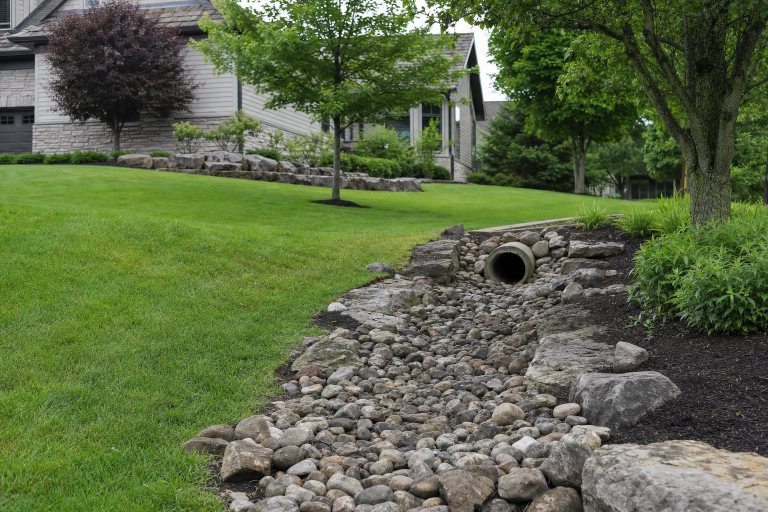
If water moves through the proposed area, evaluate drainage and grading before planting. Installing first can hide the symptom for a few weeks while making later correction harder.
2. Which plants fit the real conditions?
Plant selection should match light, soil, moisture, mature size, exposure, and the design role. A label that says full sun does not explain how a plant will respond to reflected heat beside a west-facing wall. Likewise, a moisture-tolerant plant is not automatically suited to standing water.
Use a mix that provides structure beyond one season. Fall color is valuable, but winter form, spring bloom, summer texture, and maintenance needs matter too. A durable plan avoids relying on one short display to carry the whole bed.
3. Is there enough time before the ground freezes?
Fall planting has a limit. Roots need time to settle into surrounding soil, and the calendar varies from year to year. Plant type, weather, site exposure, soil moisture, and availability all affect whether installation should proceed.
Some deciduous shrubs are well suited to the fall window, while certain evergreens or sensitive materials may be better reserved for another season. A professional recommendation should be willing to defer a plant instead of forcing it into an unsuitable schedule.
4. How will the bed connect to the whole property?
A new bed should not block a walkway, narrow a service route, trap water against the house, or create a strip too tight to maintain. Check door swings, windows, utility access, downspouts, snow storage, mower routes, and views from inside.
If the project includes patios and walkways, settle the hardscape elevations and edges before final planting. Plants can soften a finished line, but they should not be used to disguise an unresolved transition.
5. What will establishment watering require?
Cooler weather does not eliminate the need for water. Newly installed roots occupy a limited zone and can dry while the surrounding bed still appears damp. Watering should respond to plant type, soil, rainfall, drainage, and actual moisture below the surface.
Continue monitoring until the ground freezes as conditions require. Avoid both automatic daily soaking and long periods of neglect. If irrigation serves the bed, verify coverage and adjust it for seasonal weather rather than assuming a summer program still fits.
6. How much mulch is enough?
Mulch helps moderate soil moisture and temperature, but excessive depth can hold moisture against stems and trunks. Keep the root flare and plant crown visible, and spread a practical layer across the bed rather than building cones around individual plants.
Bed edges should direct surface water appropriately and remain maintainable. GroundSmith’s mulch and rock installation options can be coordinated with the planting design instead of treated as a separate cosmetic layer.
7. What happens during the first winter and spring?
Installation day is the beginning of establishment. The plan should cover watering, staking only where needed, browsing pressure, snow placement, salt exposure, and the first spring inspection. Tags and ties should not be forgotten as trunks and branches grow.
Expect some settling and seasonal change. Review plant position, mulch depth, soil moisture, and signs of damage after winter. Replacement or adjustment decisions should be based on plant condition and site evidence, not on a promise that every living material will respond identically.
What belongs in a fall planting plan
- A scaled bed outline and mature plant spacing.
- A record of sunlight, drainage, and summer stress patterns.
- Plant roles such as structure, screening, seasonal color, or erosion support.
- Utility, irrigation, downspout, and access locations.
- Installation sequence for hardscape, grading, soil preparation, and planting.
- An establishment watering and first-winter care plan.
For homeowners who want a broader transformation, GroundSmith’s landscape design and installation service connects these decisions from the first layout through the finished planting.
Common fall planting mistakes
Buying plants before measuring often creates crowding. Filling every gap for immediate impact can leave shrubs competing within a few years. Digging too deep can bury the root flare. Amending only the planting hole can create an abrupt soil pocket. Heavy fall fertilization can push growth that the season does not support.
Another mistake is pruning for a perfect shape immediately after installation. Remove damaged material as appropriate, but let the plant establish before imposing unnecessary stress. The planting should be chosen for its natural mature form rather than forced into a space it cannot fit.
Frequently Asked Questions
Is September a good time for fall landscaping in Central Ohio?
It can be, especially for many deciduous trees and shrubs, but the right window depends on the plant, site, weather, soil, and time available before freeze. A site-specific plan should guide the decision.
Do new fall plantings still need watering?
Yes. New roots can dry even in cool weather. Check moisture in the root zone and water according to the plant, soil, rainfall, and drainage until the ground freezes as conditions require.
Should every evergreen be planted in fall?
No. Suitability varies by species, site exposure, condition, and timing. Some materials may be better installed earlier or held for spring rather than placed too late.
How close should shrubs be planted?
Spacing should follow mature width, air movement, access, and the design role, not container size. A scaled plan helps avoid overcrowding and repeated pruning later.
Use fall to build the next four seasons
A strong fall installation is designed beyond autumn color. It fits the site’s water, light, access, and mature scale, then carries a clear establishment plan into winter and spring. To discuss a property-specific planting project, visit GroundSmith’s contact page.